Bot Callers Are Phoning Your Business: What to Do
Impleko AI · 10 min read
Consumer AI assistants now call businesses to book and reschedule. Learn what to share, how to verify customers, and how to set up your phone system for bot callers.
Key Takeaways
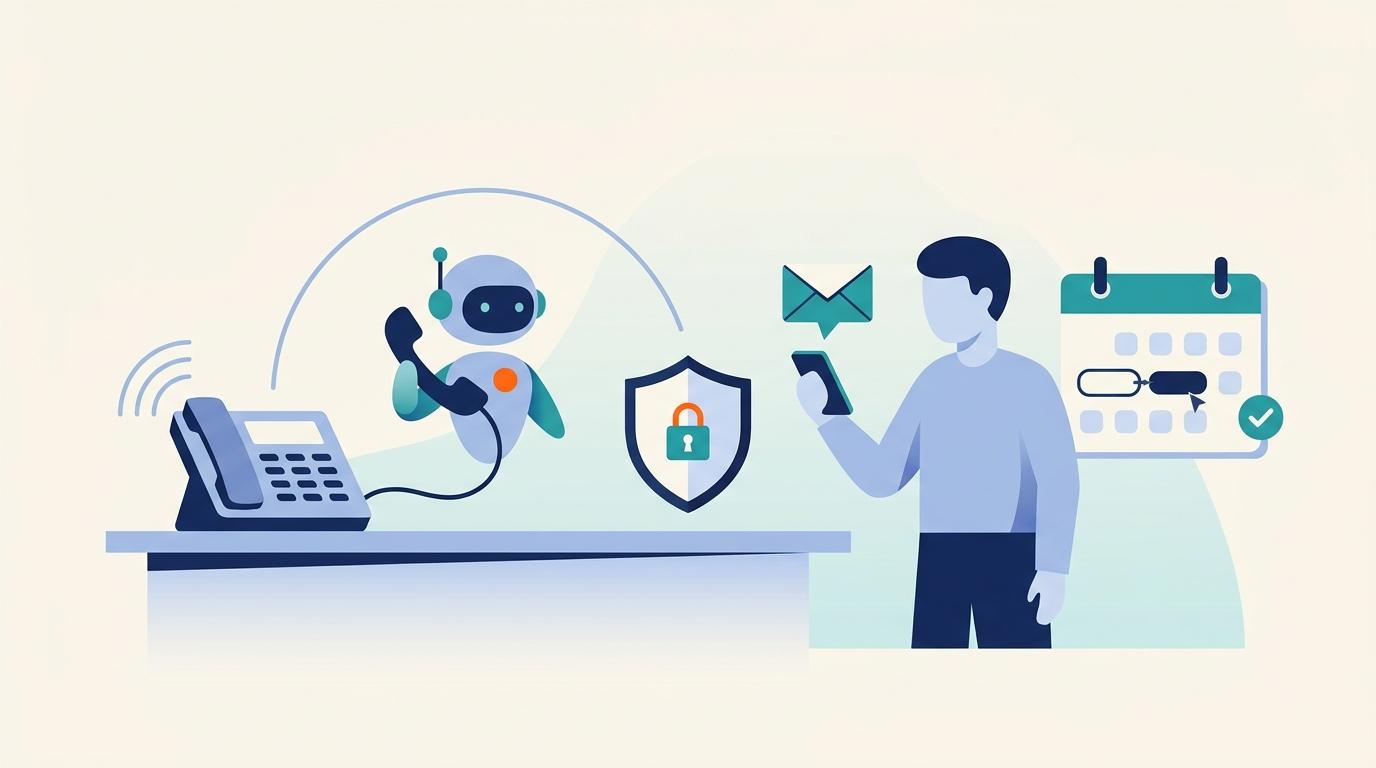
- Consumer AI assistants can now phone businesses on a person's behalf to book appointments, ask about prices, or change reservations. Your front desk will hear from them more often.
- Treat an AI agent caller like any third party: answer routine questions freely, but never disclose account details, health information, or payment data without verifying the actual customer.
- The biggest risk sits in the middle: the assistant may record, transcribe, and store everything your staff says, so your team should know what it is and is not allowed to share.
- A written "bot caller policy" plus a few phone system changes (structured answers, a verification step, a human in the loop for sensitive requests) can be in place within a week or two.
- If you already run an AI voice agent, it can handle most agent-to-agent calls faster and more consistently than a person, provided it has clear rules on identity checks.
What is an AI agent caller?
An AI agent caller is an automated voice assistant that phones a business on behalf of a consumer, using a synthetic voice to complete tasks such as booking, rescheduling, checking availability, or asking for a quote. The person who sent it is not on the line, so your staff are talking to software that reports back to them later.
The idea is not new. Google showed a restaurant-booking assistant called Duplex in its 2018 announcement, and it caused a stir mainly because people could not tell they were speaking to a machine. The difference now is scale. Newer consumer assistants, including products marketed as Instinct Concierge and Meta Muse, are positioned to place calls for everyday users, as TechCrunch reported in September 2026. As a result, a clinic, dealership, or property office may get these calls daily instead of rarely.
Why are AI agents suddenly calling businesses?
AI agents call businesses because many businesses still only accept bookings and answer questions by phone. Consumers dislike hold queues and phone tag, so they hand the call to an assistant that will wait, ask, and report back. The phone line is the last channel without an API, and agents are filling that gap.
For a business, this changes the shape of incoming calls. Agent callers tend to arrive with a specific task, a list of acceptable times, and no patience for "can I put you on hold?" They also call outside business hours, which turns missed calls into missed bookings faster than human callers would.
The upside is real. An agent caller is a qualified lead that already knows what it wants. If your phone setup can answer it cleanly, you get a booked appointment with almost no staff time.
Should your business answer AI agent calls or block them?
Most businesses should answer AI agent calls, because the person behind the call is a real customer trying to give you business. Blocking them means losing bookings to a competitor whose line picks up. The right move is to answer, handle routine requests normally, and add guardrails only for sensitive actions.
Blocking also rarely works in practice. A good synthetic voice is hard to detect reliably, and a blanket block will catch legitimate customers who use accessibility tools or speech assistance. A policy based on what the caller is asking for works far better than one based on whether the caller is human.
There are exceptions. If you see repeated calls that scrape your pricing, probe for staff names, or try to extract account details, those are worth flagging and rate-limiting regardless of whether a human or a bot is dialing.
How can you tell if a caller is an AI agent?
You often cannot tell with certainty, and you should not depend on it. Some assistants announce themselves at the start of the call, which is good practice and increasingly expected. Others sound fully human. Train staff to spot common signals, then route by request type rather than by guessing.
| Signal | What it sounds like | What staff should do |
|---|---|---|
| Self-disclosure | "I'm an automated assistant calling for Jane Smith" | Proceed with routine help, apply verification rules for anything account-related |
| Structured requests | Lists several acceptable times or exact service names | Answer directly; offer concrete slots |
| Unusual timing | Slight pauses before replies, no small talk | Keep answers short and specific |
| Scope creep | Asks for account balances, test results, or card details | Stop and require verification with the actual customer |
| Repeated pricing probes | Many calls asking only for prices or staff names | Log and review; consider publishing prices online instead |
What information is safe to share with a bot caller?
Public information is safe to share with an AI agent caller: hours, location, services, general pricing, and open appointment slots. Anything tied to a specific person's account, health, finances, or identity should require the same verification you would ask of an unknown human, ideally confirmed directly with the customer.
| Request type | Share with an agent caller? | Recommended check |
|---|---|---|
| Hours, address, services | Yes | None |
| Open appointment slots | Yes | None |
| Book a new appointment | Yes | Send confirmation by text or email to the customer's own contact |
| Reschedule or cancel existing booking | Yes, with care | Confirm via a link or code sent to the number on file |
| Account balance, order history | No, not by voice | Direct the customer to a secure portal or a verified callback |
| Medical, legal, or financial records | No | Follow your regulated disclosure process; never by agent call |
| Payment card details | Never read out | Use a secure payment link |
The confirmation link is the key move. It shifts proof of identity from the voice on the phone (which may be synthetic) to a channel the real customer controls.
What are the privacy and data access risks of AI agent callers?
The main privacy risk with AI agent callers is that the conversation may be recorded, transcribed, and stored by a third-party assistant provider you have no agreement with. Anything your staff say could end up in another company's logs. The consumer also gives that assistant access to their calendar, contacts, and sometimes payment details, which creates its own exposure.
For the business, three concerns stand out:
- Over-disclosure. Staff who are trained to be helpful may read out details a bot never needed. Once said, the information leaves your control.
- Impersonation. A synthetic voice that claims to act for a customer may not have that customer's permission at all. Voice alone is not proof of identity.
- Regulated data. In healthcare, banking, and fintech, sharing protected information with an unverified third party can create compliance problems even when the caller seems legitimate.
For the consumer, the tradeoff is convenience against access. An assistant that books a dentist appointment typically needs calendar access, name, phone number, and sometimes insurance details. Your business cannot control that choice, but you can avoid adding to it by never asking an agent to read back sensitive data.
How should you set up your phone system for AI agent callers?
Set up your phone system by giving routine requests a fast, structured path and sensitive requests a verification gate. In practice that means clear scripts for staff, a confirmation step sent to the customer's own number, and logging so you can spot abuse. Most businesses can do this with tools they already pay for.
A practical setup looks like this:
- Write a one-page bot caller policy. List what anyone (human or agent) can get freely and what requires verification. Pin it at the front desk.
- Send confirmations out-of-band. Use Twilio or your CRM (GoHighLevel automation handles this well) to text a confirmation or a reschedule link to the number on file.
- Log the calls. Tag calls flagged as automated so you can review patterns monthly.
- Publish what agents ask for most. Putting prices, hours, and booking links online cuts repetitive calls from both people and bots.
- Keep a human in the loop. Escalate disputes, refunds, and anything regulated to a staff member.
Workflow tools such as n8n, Make, or Zapier can connect the phone system, calendar, and CRM so a booking made by an agent caller creates the same records as one made by a person.
What happens when your AI voice agent talks to their AI agent?
When your AI voice agent answers a call from a consumer's AI agent, the call is usually faster and more accurate than a human conversation, because both sides deal in structured details like times, names, and services. The risk is that two agents agree to something neither human approved, so confirmation rules matter even more.
Platforms like Retell AI and VAPI let you build a voice agent that checks real calendar availability, books the slot, and texts the customer a confirmation link. The agent should be told plainly which actions it may take on voice alone and which need a confirmed reply from the customer. For example, booking a new consultation is fine; canceling a surgery or changing a payment method is not.
This is the sort of system Impleko AI builds: an AI voice agent connected to your calendar and CRM, with explicit identity rules written into its instructions and tested against agent callers before it goes live. The honest limit is that no voice agent can verify identity from voice alone, so the out-of-band confirmation step stays essential.
Is it legal for an AI agent to call a business?
In most places, an AI agent calling a business to make a booking is not illegal, but the rules are evolving and depend on jurisdiction. In the US, the FCC ruled in 2024 that AI-generated voices count as "artificial" under the Telephone Consumer Protection Act, which mainly affects unsolicited calls to consumers.
For your business, the more relevant legal questions are about what you disclose and record. Call recording consent laws vary by state and country, and regulated industries have strict rules on sharing personal data with third parties. Check with your counsel before you change recording or disclosure practices, especially in healthcare and financial services.
How long does it take to get ready for AI agent callers?
A basic readiness plan (a written policy, staff briefing, and out-of-band confirmations) can be in place within a week or two. Deploying your own AI voice agent that handles agent callers end-to-end typically takes a few weeks, including testing against realistic calls and identity edge cases.
Start small. Say a clinic spends one afternoon writing its policy and one morning wiring confirmation texts through its CRM. That alone closes the biggest gap: changes to bookings made by a voice that no one verified. Impleko AI typically starts clients with a short proof of concept on one call type before widening the agent's scope.
Frequently Asked Questions
What is an AI agent caller?
An AI agent caller is an automated voice assistant that phones a business on behalf of a consumer to book, reschedule, or ask questions. The person who sent it is not on the call and gets a summary afterward.
Should my business block calls from AI assistants?
Usually no. The person behind the call is a real customer, so answer routine requests and add verification only for sensitive actions like account changes or payments.
What should staff never share with an AI agent caller?
Staff should never share payment card details, account balances, medical or financial records, or other personal data by voice. Send the customer a secure link or arrange a verified callback instead.
How do I verify that an AI agent is acting for a real customer?
Send a confirmation code or link to the phone number or email you already have on file for that customer. Voice alone, especially a synthetic one, is not proof of identity.
Can my own AI voice agent handle calls from other AI agents?
Yes. A voice agent built on platforms like Retell AI or VAPI can book and confirm appointments with agent callers, as long as it follows clear rules about which actions need customer confirmation.
Do AI agent callers record the conversation?
Many do, and transcripts may be stored by the assistant's provider. Assume anything said on the call could be retained and train staff accordingly.